Hemp is one of the most misunderstood plants on earth, and that confusion has real costs for people trying to make informed choices.
For decades, bad information crowded out the facts. Hemp got lumped in with things it isn’t, and a plant with a genuinely long history got buried under politics and myth.
This guide cuts through that. You’ll learn what hemp is, where it comes from, how it’s been used across history, what the law actually says, and what “what is hemp” really means when you strip away the noise.
Starting with the plant itself makes the most sense.
So, What Exactly Is Hemp?
Hemp is a variety of the Cannabis sativa plant, bred over generations to contain very little THC, the compound that makes marijuana psychoactive. By legal definition in the United States, hemp must contain 0.3% THC or less by dry weight. That’s a trace amount, not enough to produce any intoxicating effect.
The confusion with marijuana comes down to breeding, not species. Both plants are Cannabis sativa, but they were developed for completely different purposes.
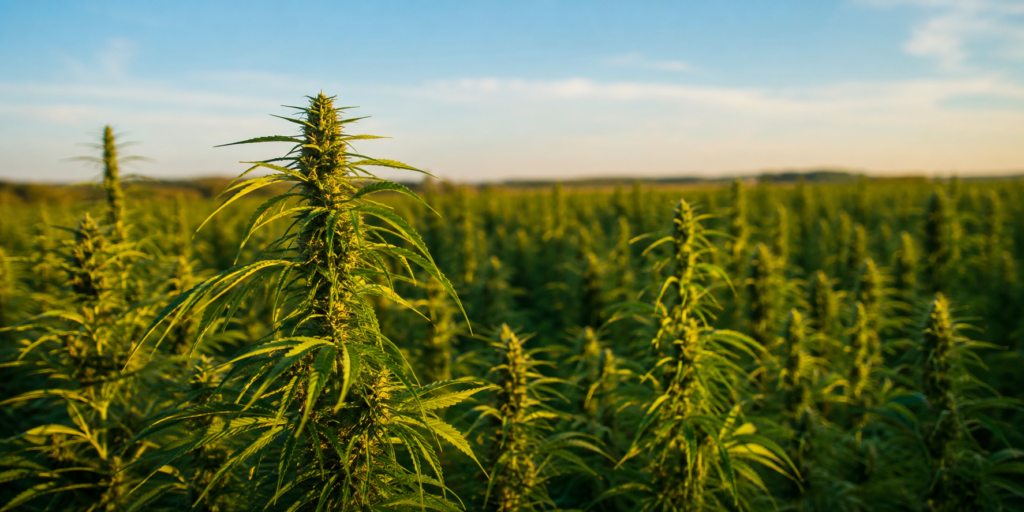
The plant itself has four main parts, each useful in its own way. The stalks yield fiber. The seeds provide oil and protein. The leaves and flowers contain cannabinoids like CBD. That range of uses explains why the plant has attracted human attention for thousands of years.
A Plant With a Long, Complicated Past
People have been growing hemp for a long time. Archaeologists have found hemp fiber in ancient China dating back roughly 10,000 years, and Egyptian mummies were wrapped in hemp cloth. Colonial American farmers grew it for rope and sail canvas because it was one of the strongest natural fibers available.
Then the 20th century complicated everything. The Marihuana Tax Act of 1937 essentially buried the crop, lumping it together with its psychoactive cousin despite the meaningful chemical differences between them. Decades of prohibition followed.
The 2018 U.S. Farm Bill changed that, re-legalizing hemp at the federal level and reopening research into what the plant can actually do.
How Does Hemp Actually Work?
Hemp is a chemically complex plant. Its flowers and leaves contain cannabinoids, including CBD (cannabidiol), along with terpenes, flavonoids, and dozens of other compounds that researchers are still working to understand.
Your body has a system called the endocannabinoid system, a network of receptors that helps regulate things like sleep, mood, and stress response. Plant cannabinoids from hemp can interact with those receptors, which is why people find CBD products worth exploring.
One thing worth clarifying: hemp-derived CBD won’t make you feel high. Federal law caps THC in hemp at 0.3%, which is far too low to produce any psychoactive effect.
That chemistry is also what drives the plant’s surprisingly wide range of practical uses.
What Hemp Is Used For Today
Hemp shows up in more places than most people expect. The stalk’s long fibers have been spun into rope and textiles for centuries, and today those same fibers go into building materials like hempcrete, a lightweight concrete alternative made from the plant’s woody core mixed with lime.
The seeds are probably the most familiar grocery-store version. They’re a solid source of protein, healthy fats, and omega fatty acids. Hemp seed oil presses out of those seeds and works well as a cooking or finishing oil.
Then there’s the flower. That’s where CBD is concentrated, which is why you see it listed on oils, topicals, and supplements. Whether any of that is good for you is a fair question worth looking at closely.
Is Hemp Good or Bad for You?
The answer depends a lot on which part of the plant you’re talking about.
Hemp seeds are genuinely nutritious. They contain protein, healthy fats (including omega-3 and omega-6 fatty acids), and several minerals. Hemp seed oil pressed from those seeds has a similar nutritional profile. These are well-established facts, not marketing claims.
CBD and other hemp extracts are a different story. Most adults seem to tolerate them well, but the research is still catching up to the popularity. A lot of claims you see go further than the science actually supports right now.
The honest answer is: hemp food products have a solid track record, while hemp extracts are promising but not fully understood. And for certain people, even the well-studied forms come with real caveats worth knowing.
Who Should Think Twice Before Using Hemp
Most people can use hemp-derived products without issue, but a few groups really should check with a doctor first.
People taking prescription medications deserve extra caution, particularly blood thinners like warfarin. CBD can interfere with the liver enzymes that process certain drugs, which may cause those medications to behave differently than expected.
Pregnant and breastfeeding individuals are another group where the honest answer is: the data is thin. Caution is the reasonable default until more research exists.
For children, medical guidance isn’t optional. Hemp-derived products should only be used under a doctor’s supervision.
And if you have any concerns about how your body processes compounds like these, your kidneys are worth thinking about too.
Is Hemp Hard on Your Kidneys?
The short answer is reassuring: current evidence does not link hemp or CBD to kidney damage in people with healthy kidneys. Most research points to well-tolerated use, with no clear pattern of kidney harm.
Where things get murky is with synthetic cannabinoids, sometimes sold under names like “K2” or “spice.” Those compounds have been tied to serious kidney problems. They are not hemp. They are not CBD. They are manufactured chemicals that belong in a completely different category.
If you already have kidney disease or reduced kidney function, check with your doctor before adding any new supplement. That advice holds for hemp the same as anything else.
Knowing what a product actually contains is where this all comes together.
Reading Labels and Staying Grounded
Labels on hemp products can feel like a foreign language at first. Full-spectrum means the extract keeps most of the plant’s natural compounds, including trace amounts of THC (within legal limits). Broad-spectrum is similar but with the THC removed. Isolate is a single compound, stripped of everything else.
None of those is automatically better. It depends on what you want and what the company can actually prove is in the bottle.
That proof comes from a Certificate of Analysis, a third-party lab report that shows exactly what a product contains. Any reputable company makes these easy to find. If they don’t, that tells you something.
Treat hemp products the way you’d treat any supplement: read carefully, verify the claims, and keep your expectations honest. That same grounded approach carries right into pulling everything together.
Key Takeaways
Hemp is a variety of the Cannabis sativa plant that contains very little THC, the compound that causes a high. It has been grown for thousands of years, used for fiber, food, and more, and it is legally distinct from marijuana under U.S. federal law.
The plant has a long history that was interrupted by decades of prohibition. Since the 2018 Farm Bill, hemp farming is legal again in the United States, though state rules still vary. Products derived from hemp, including CBD, exist in a complicated regulatory space that is still being sorted out.
Reading labels carefully, understanding where products come from, and keeping expectations realistic are the most practical things anyone can take away from learning what hemp is.
## What to Keep in Mind About Hemp
Hemp is a useful, well-studied plant with a long history and a lot of practical applications. It is not a drug, not a miracle, and not something to fear.
The most useful thing you can do now is keep reading from credible sources, check the laws in your state, and look closely at any product before you buy it. Labels, sourcing, and third-party testing matter more than marketing claims.
If something about hemp has caught your attention, whether it’s the fiber, the seeds, or the CBD extracts, follow that thread. A curious, informed buyer is always going to make better choices than one who is just going along with the trend.
*Health Disclaimer: These statements have not been evaluated by the Food and Drug Administration. This product is not intended to diagnose, treat, cure, or prevent any disease. Consult your doctor before use, especially if you are pregnant, nursing, taking medication, or managing a medical condition.*