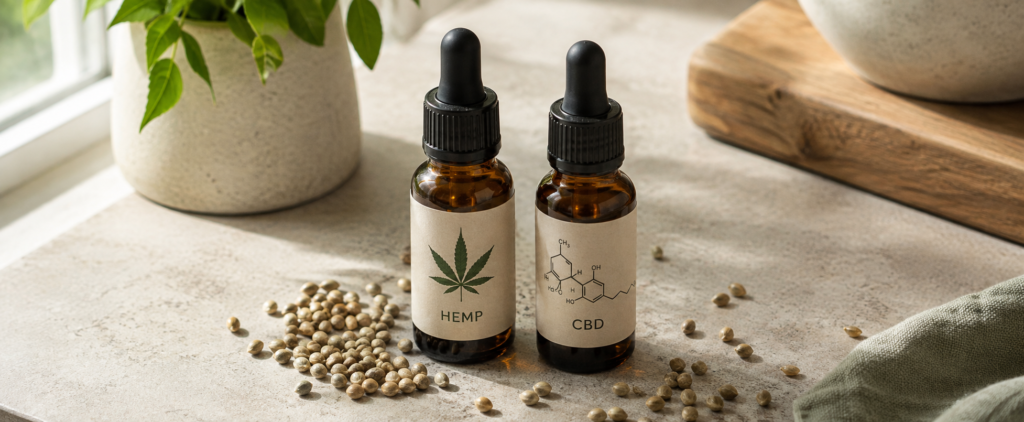
Hemp oil and CBD oil are not the same product, even though they often sit next to each other on store shelves and come in nearly identical packaging. Both may feature green labels, hemp leaves, and words such as “natural” or “wellness.” What is inside the bottles, however, can be completely different.
This confusion causes plenty of shoppers to buy hemp seed oil when they were looking for CBD. Others pay more for a product without understanding what it contains or why it costs more.
The easiest way to avoid this mistake is to understand where each oil comes from, what compounds it contains, and which words matter most on the label.
Two Bottles, Two Very Different Products
Hemp seed oil is made by pressing the seeds of the hemp plant. CBD oil is made using an extract taken primarily from the flowers and other above-ground parts of the plant.
That difference changes everything.
Hemp seeds are valued for their nutritional oils, fatty acids, and vitamin E. They naturally contain little to no CBD or other cannabinoids. The flowers and leaves, on the other hand, contain the resin-producing structures where cannabinoids such as CBD are concentrated.
This means hemp seed oil may be useful as a food ingredient, nutritional oil, or skincare product, but it should not be confused with CBD oil.
The front of the bottle may not make this clear. The ingredient list and cannabinoid information usually tell the real story.
Where Hemp Seed Oil Comes From
Hemp seed oil comes from the seeds of the hemp plant. Manufacturers typically produce it by cleaning and pressing the seeds in much the same way that olives, sunflower seeds, and flaxseeds are pressed to make oil.
Cold pressing is a common method because it limits the amount of heat used during production. The resulting oil usually has a green color and a mild, nutty flavor.
Hemp seeds naturally contain protein, vitamin E, and a combination of omega-3 and omega-6 fatty acids. Hemp seed oil is therefore commonly sold as a cooking ingredient, dietary supplement, or ingredient in lotions, soaps, and other skincare products.
What hemp seeds do not contain in meaningful amounts is CBD. Small traces could potentially be introduced if plant material comes into contact with the seeds during harvesting or processing, but properly produced hemp seed oil is not considered a source of cannabinoids.
If a bottle lists only “hemp seed oil” or “Cannabis sativa seed oil,” it should not be expected to provide CBD.
Where CBD Oil Comes From
CBD oil begins with cannabinoid-rich parts of the hemp plant, particularly the flowers. Depending on the manufacturing process, leaves and other above-ground plant material may also be used.
Manufacturers extract CBD and other plant compounds before combining the extract with a carrier oil. Common carrier oils include coconut-derived MCT oil, olive oil, and hemp seed oil.
This last point can make labels especially confusing. A CBD product may contain hemp seed oil, but the hemp seed oil is only carrying the CBD extract. It is not the original source of the CBD.
Carbon dioxide extraction is one widely used production method. Ethanol extraction and other carefully controlled methods may also produce high-quality extracts. The extraction method alone does not determine whether a product is good or bad. Responsible manufacturing, accurate labeling, contaminant testing, and access to a current certificate of analysis are more useful signs of quality.
Because CBD oil contains cannabinoids, its label should clearly state how much CBD the product contains.
Who Should Be Careful With Hemp Seed Oil?
Hemp seed oil is generally used as a food or skincare ingredient, but that does not mean it is a good fit for everyone.
Anyone with a known sensitivity to hemp seeds should avoid it. People using it on their skin may also want to test a small area first, especially if they have sensitive skin or a history of reactions to plant-based products.
If you take prescription medication, are pregnant or breastfeeding, are preparing for surgery, or are managing an ongoing health condition, discuss new supplements with a qualified healthcare professional. This is especially important when using larger supplemental amounts rather than ordinary amounts in food.
The concern is greater with CBD because CBD may affect how the body processes certain medications. A pharmacist or healthcare professional can help identify possible interactions based on the medications you take.
Does Hemp Seed Oil Help With Joint Pain?
Hemp seed oil contains omega-3 and omega-6 fatty acids, which are part of a balanced diet and play several roles in the body. This nutritional profile is one reason some people include hemp seed oil in their daily wellness routines.
That does not make hemp seed oil a proven treatment for joint pain, arthritis, or inflammation. It should be viewed as a food or nutritional oil rather than a pain treatment.
Marketing language can sometimes blur this distinction. Phrases such as “supports joint wellness” or “promotes a healthy inflammatory response” may sound medical, but they do not prove that a product treats a disease or relieves pain.
If joint discomfort is persistent, severe, or getting worse, it is better to speak with a healthcare professional than to rely on a bottle of hemp seed oil.
Hemp Oil or CBD Oil for Arthritis?
People looking for hemp-based wellness products often compare hemp seed oil with CBD oil for arthritis or general joint discomfort. The two products should not be treated as interchangeable.
Hemp seed oil provides fatty acids and other nutrients but contains little to no CBD. CBD oil contains a stated amount of CBD and may also contain other cannabinoids and plant compounds, depending on the type of extract used.
Over-the-counter CBD products are not approved by the FDA to treat arthritis or joint pain. Research into CBD continues, but product quality, strength, and individual responses can vary considerably.
It is also worth noting that the FDA has approved a prescription CBD medication for certain seizure disorders. That approval does not mean ordinary retail CBD products have been approved to treat pain, arthritis, or other medical conditions.
Rather than asking which oil is “better for arthritis,” start by identifying what is actually in the bottle. If you have arthritis, take medication, or are considering CBD for an ongoing symptom, speak with a qualified healthcare professional before using it.
Which Oil Is Better for Your Goals?
Neither product is automatically better. They are made for different purposes.
Hemp seed oil makes sense when you want a nutritional oil, cooking ingredient, or moisturizing skincare product. It offers fatty acids and vitamin E, but it is not a meaningful source of cannabinoids.
CBD oil makes more sense when cannabinoids are the reason you are shopping. A legitimate CBD product should identify the amount of CBD it contains and provide testing that confirms its cannabinoid content.
Price can provide another clue. Hemp seed oil is generally inexpensive and is often sold in larger bottles. CBD oil usually costs more because growing, extracting, testing, and measuring cannabinoid-rich hemp extract requires additional processing.
Price alone does not prove quality, but an unusually cheap product making large CBD claims deserves a closer look.
How to Read a Hemp or CBD Label
The ingredient list is the best place to begin.
“Hemp seed oil” and “Cannabis sativa seed oil” refer to oil pressed from hemp seeds. These ingredients should not be assumed to contain CBD.
Terms such as “CBD,” “cannabidiol,” “hemp extract,” or “phytocannabinoid-rich hemp extract” indicate that the product may contain cannabinoids. The label should also state how many milligrams of CBD are present.
A full-spectrum hemp extract contains CBD along with other naturally occurring hemp compounds. It may contain legally permitted trace amounts of THC.
A broad-spectrum extract is generally processed to remove THC while retaining CBD and some additional plant compounds. Because manufacturing standards vary, people who must avoid THC should still review the product’s laboratory results.
CBD isolate is a highly purified form of CBD that is intended to contain no other cannabinoids. Testing remains important because the word “isolate” by itself is not a guarantee.
Also check whether the CBD amount refers to the entire bottle or one serving. Labeling practices vary. If a bottle contains 1,500 milligrams of CBD in 30 one-milliliter servings, for example, each serving contains approximately 50 milligrams.
Look for a Certificate of Analysis
A reputable CBD company should provide a certificate of analysis, often called a COA, from an independent laboratory. Many companies place a QR code on the package that links directly to the report.
The report should identify the product or batch and confirm how much CBD, THC, and other cannabinoids were detected. Depending on the testing performed, it may also include results for pesticides, heavy metals, residual solvents, or microbial contaminants.
Check that the batch number on the report matches the product in your hand. Also look at the testing date. A report for a different product or an old batch does not tell you much about the bottle you are considering.
Be cautious when a product makes a large milligram claim without explaining what the number represents. Some labels advertise the total amount of “hemp extract” rather than the actual amount of CBD. Those numbers are not necessarily the same.
The Short Version
If you are standing in a store and need to make a quick decision, remember this:
Hemp seed oil comes from the seeds and naturally contains little to no CBD. CBD oil contains CBD extracted from cannabinoid-rich parts of the hemp plant.
If you want an oil for cooking, nutrition, or moisturizing your skin, hemp seed oil may fit your needs. If you are specifically looking for cannabinoids, choose a product that clearly lists CBD, provides the amount in milligrams, and offers an independent certificate of analysis.
Do not rely on hemp leaves, green packaging, or the word “hemp” on the front of the bottle. Those details may be designed to catch your attention, but they do not tell you how much CBD the product contains.
Key Takeaways
Hemp seed oil and CBD oil can come from the same type of plant, but they are made from different parts and contain different compounds.
Hemp seed oil is pressed from hemp seeds. It is used in foods, supplements, and skincare products and naturally contains little to no CBD.
CBD oil contains an extract made from cannabinoid-rich hemp material. It should clearly identify the amount of CBD in the bottle and be supported by current third-party testing.
Neither product is the right choice for every situation. The better option depends on what you want, what the product actually contains, and whether it is appropriate for you.
Picking the Right Bottle
Start with your goal, and then turn the bottle around.
If you want a skin-friendly or food-grade oil containing fatty acids, look for hemp seed oil. If you want CBD, look for “CBD,” “cannabidiol,” or a clearly identified hemp extract along with a specific CBD amount.
Before buying a CBD product, review its certificate of analysis and make sure the test results match the product’s batch number. Avoid products that hide behind vague hemp language, provide no cannabinoid breakdown, or make promises to diagnose, treat, cure, or prevent a medical condition.
Once you know which words to look for, the difference becomes much easier to spot. Read the ingredients, check the CBD amount, and confirm the laboratory results. Those three steps can help you leave with the product you intended to buy.
*Health Disclaimer: These statements have not been evaluated by the Food and Drug Administration. This product is not intended to diagnose, treat, cure, or prevent any disease. Consult your doctor before use, especially if you are pregnant, nursing, taking medication, or managing a medical condition.*